
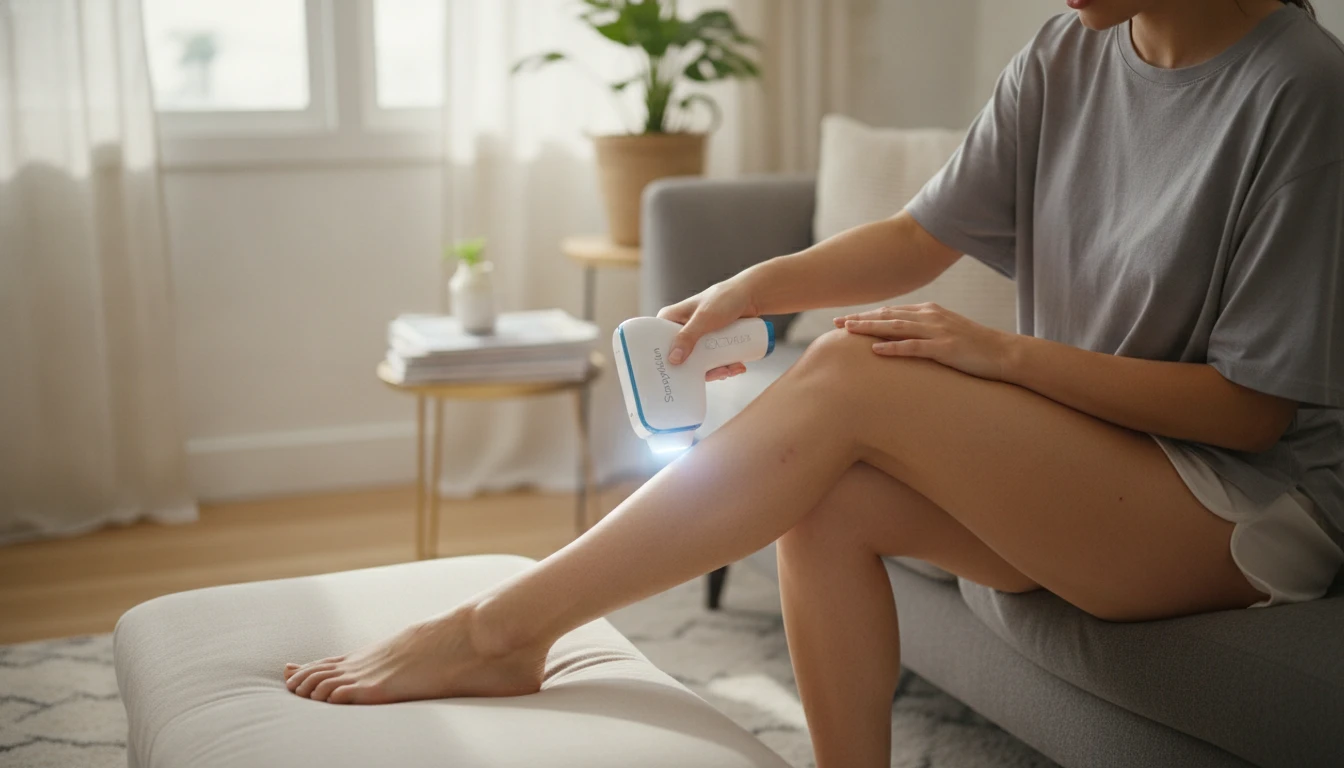
If you’ve spent any time looking into IPL hair removal, you’ve probably come across two very different answers to the “is it permanent?” question. Some sources say yes, others say it only lasts a year or two, and a few will hedge completely by calling it “semi-permanent.”
The truth is somewhere in between — and once you understand the science, the answer becomes clear and actionable.
IPL hair removal delivers what the FDA officially defines as permanent hair reduction: a long-term, stable decrease in the number of hairs regrowing after a completed treatment course. That’s different from complete hair removal, but for most people, the practical result feels the same — weeks or months of smooth, hair-free skin with a fraction of the maintenance you’d need with shaving or waxing.
This guide breaks down exactly how permanent IPL results are, how long they last, what affects your results, and how to make them last as long as possible.
What Does “Permanent Hair Reduction” Actually Mean?
The FDA Definition of Permanent Hair Reduction
The US Food and Drug Administration uses a specific term when it evaluates hair removal technology: permanent hair reduction. According to the FDA, this means the long-term, stable reduction in the number of hairs regrowing after a treatment regimen.
Notice what’s not in that definition: the word “elimination.” Permanent reduction doesn’t guarantee zero regrowth forever. What it does mean is that after completing a treatment course, the hair that returns is significantly sparser, finer, and slower-growing than it was before — and that this reduced state is stable over time.
For everyday use, this translates to: fewer hairs, less frequent shaving, and for many people, entire body areas that effectively stay hair-free between occasional maintenance top-ups.
IPL vs. Electrolysis — Why “Permanent” Means Different Things
Electrolysis is the only hair removal method currently recognised as truly permanent — meaning it can destroy follicles entirely and prevent any future regrowth. The FDA labels electrolysis as “permanent hair removal.”
IPL sits in a different category, described as permanent hair reduction. That said, studies consistently show that 70–90% of treated hairs may never return after a full treatment course. For most people, that’s permanent enough.
IPL is also far more practical at scale: electrolysis treats one follicle at a time, making full-body treatment cost-prohibitive and extremely time-consuming. IPL treats entire areas in minutes.
How IPL Hair Removal Works — The Science Behind the Results
Targeting Melanin with Intense Pulsed Light
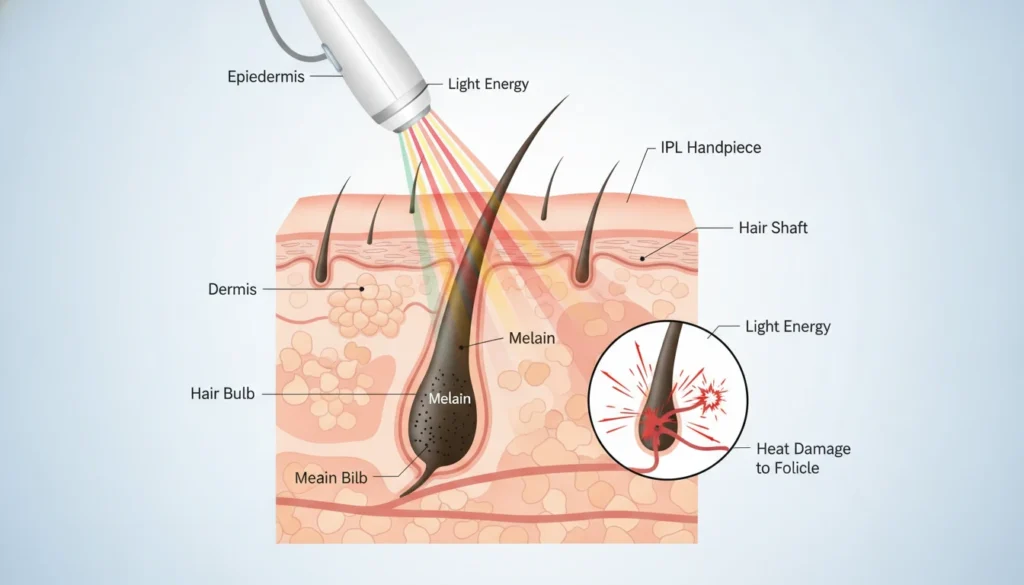
IPL stands for Intense Pulsed Light. Unlike a laser, which uses a single concentrated wavelength, IPL emits broad-spectrum light across a range of wavelengths (typically 500–1200nm). This light targets melanin — the pigment that gives hair its colour.
When an IPL flash penetrates the skin, the melanin in your hair shaft and follicle absorbs the light energy and converts it to heat. That heat damages the follicle’s growth structures — specifically the hair papilla and follicle stem cells — disrupting its ability to produce new hair.
Because the process relies on melanin contrast, IPL works best on darker hair against lighter skin. The greater the contrast between hair colour and skin tone, the more selectively the light energy can target the follicle without affecting the surrounding skin.
Why Multiple Sessions Are Necessary
No single IPL session can treat all your hair permanently. The reason comes down to biology: IPL is only effective on hair in the anagen (active growth) phase of the growth cycle.
At any given moment, only a portion of your body hair is in the anagen phase — the rest is in the transitional (catagen) or resting (telogen) phase, where it’s not responsive to IPL light. Spacing treatments 1–2 weeks apart ensures that each session catches a fresh wave of follicles that have just entered the active growth phase.
This is why a course of 6–12 sessions is standard. Each one systematically targets a new batch of active follicles, progressively reducing overall hair density until the treated area is largely dormant.
The Three Phases of Hair Growth and Why They Matter
- Anagen (Growth Phase): Hair is actively growing, connected to the blood supply, and fully responsive to IPL. This is the only phase where treatment is effective.
- Catagen (Transitional Phase): Hair detaches from the follicle and stops growing. IPL has minimal impact here.
- Telogen (Resting Phase): Hair is dormant and about to shed. IPL cannot affect follicles in this stage.
Because different hairs cycle through these phases independently, multiple treatment sessions are needed to catch each follicle during its vulnerable anagen window.
How Long Does IPL Hair Removal Last?
First-Time Results — What to Expect After Your Initial Sessions
Most people notice the first signs of results after sessions 2–3. Hair in treated areas begins to shed, often appearing to “grow through” the skin briefly before falling out. This is normal — the follicle is expelling the damaged hair shaft.
Don’t be alarmed if hair seems to grow back normally after your very first session. At that stage, you’ve only captured a fraction of your hair’s anagen-phase follicles. Consistency is what creates the compounding effect that leads to permanent reduction.
Long-Term Results — How Long Before Hair Stops Growing Back?
After completing a full course of 8–12 sessions, the majority of users report 80–95% permanent hair reduction. Clinical data consistently show that most treated hairs do not return, and those that do are significantly finer and lighter than before.
For areas with lower hormonal influence (legs, arms, underarms), results tend to be the most stable and long-lasting — often requiring only occasional maintenance once or twice a year, if at all.
Areas that are more hormonally sensitive — such as the face, chin, upper lip, bikini line, and abdomen — may see more gradual regrowth over time, particularly if hormone levels change due to pregnancy, menopause, or medical conditions. In these areas, more regular maintenance sessions are typical.
Factors That Affect How Long IPL Results Last
Several variables influence the duration of your IPL results:
- Hair Colour: Dark hair absorbs IPL light most effectively. Results are strongest for black and dark brown hair. Lighter hair colours (blonde, red, grey, white) contain less melanin and respond more slowly or not at all.
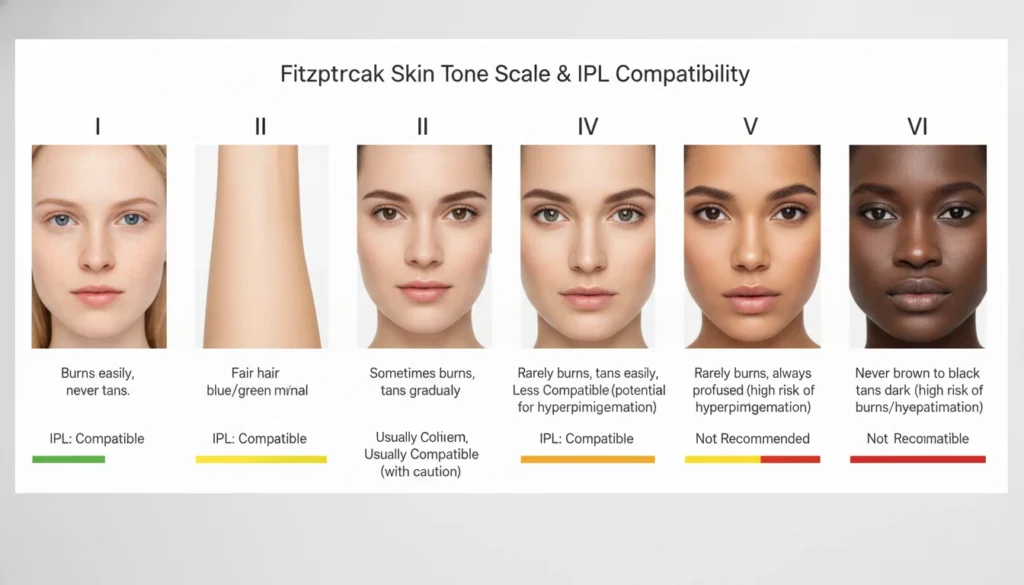
- Skin Tone: IPL works most effectively on Fitzpatrick skin tones I–V. Very dark skin tones (Type VI) carry a risk of the skin absorbing too much light energy, making IPL unsuitable in those cases.
Device Quality: FDA-cleared devices with sufficient energy output produce the most reliable results. A high-quality at-home IPL handset consistently outperforms lower-powered consumer devices in terms of both speed and durability of results.
- Treatment Consistency: Skipping sessions or extending the gaps between treatments significantly reduces effectiveness. Consistent weekly sessions during the initial course are critical.
- Hormonal Factors: Hormonal fluctuations from pregnancy, menopause, or conditions like PCOS can stimulate new follicle activity in previously treated areas, triggering some regrowth.
- Body Area: Hair on the legs, arms, and underarms typically responds fastest and maintains the most stable results. The face and bikini line may need more frequent maintenance.
- Genetics: Individual variation in follicle density, hair thickness, and growth cycles affects how many sessions you need and how long results hold.
Week-by-Week IPL Results Timeline
Weeks 1–3: The First Signs of Change
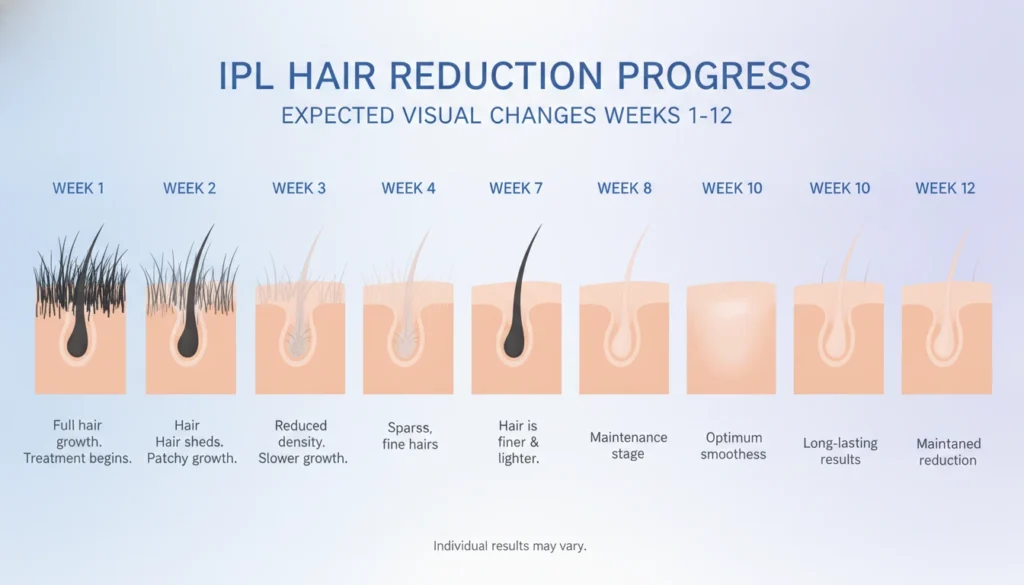
Sessions 1 and 2 target the first wave of anagen-phase follicles. Hair in treated areas begins to shed 1–2 weeks after your first session. The skin may feel smoother than usual even between shaves — a sign that follicle activity is slowing in the treated areas. You can begin increasing your device intensity level as your skin adapts.
Weeks 4–6: Dramatic Reduction Kicks In
By sessions 3 and 4, most users report a visible and noticeable difference. Around 40–60% of hair in treated areas has stopped regrowing. Shaving frequency drops significantly, and regrowth that does appear is finer and lighter in texture. This is often the stage where people become convinced IPL truly works.
Weeks 7–9: Near Hair-Free Results
Sessions 5 and 6 continue to reduce active follicles. Approximately 70–80% hair reduction is typical by this stage. Many users stop shaving entirely in treated areas, or only shave once every few weeks. Any remaining hair is noticeably finer than your original hair growth.
Weeks 10–12: Permanent Reduction Achieved
After completing 8 or more sessions, most users reach the 80–95% hair reduction milestone. This is the point where the FDA’s definition of permanent hair reduction applies: the treated hair is significantly and stably reduced. Monthly maintenance sessions help lock in results and address any remaining active follicles.
Who Gets the Best Results from IPL Hair Removal?
Ideal Skin Tone and Hair Colour Combinations
IPL works on the principle of melanin contrast. The most effective results come from the combination of darker hair (which absorbs more light energy) and lighter skin (which reflects it), allowing the device to selectively target the follicle without dispersing energy into surrounding tissue.
The best candidates for IPL are typically:
- Fitzpatrick Skin Type I–III (fair to medium skin) with dark brown or black hair — fastest results, highest reduction percentages
- Fitzpatrick Skin Type IV–V (olive to medium-dark skin) with dark hair — effective with consistent use, may take slightly more sessions
IPL is generally not recommended for:
- Fitzpatrick Skin Type VI (very dark skin) — risk of uneven light absorption
- Blonde, red, grey, or white hair — insufficient melanin for the IPL light to target effectively
Which Body Areas Respond Fastest to IPL
- Underarms: Fast response, typically 4–6 sessions for significant reduction
- Lower legs: Consistent and reliable results, 6–8 sessions typical
- Bikini line: Responds well, 6–10 sessions; hormonally influenced areas may need occasional maintenance
- Upper lip and chin: Effective but may need more maintenance due to hormonal hair growth patterns
- Arms and back: Reliable results with consistent treatment
When IPL May Not Be the Right Choice
- Very dark skin tones (Fitzpatrick Type VI) — laser with specific wavelengths is safer
- Light, red, grey, or white hair — insufficient melanin for IPL to target
- Active skin conditions, open wounds, or heavily tanned skin in the treatment area
- Pregnancy — IPL is not recommended during pregnancy
- People on photosensitising medications — consult a dermatologist first
How to Make IPL Results Last as Long as Possible
Pre-Treatment Prep That Makes a Difference
What you do before each session directly affects how much energy reaches your follicles:
- Shave 24 hours before each session: Shaving removes surface hair so IPL energy goes to the follicle root rather than burning the hair shaft above the skin. Never wax, epilate, or thread between sessions — these remove the hair root that IPL needs to target.
- Avoid sun exposure: Tanned skin contains more surface melanin, which increases the risk of the IPL energy dispersing into the skin rather than targeting follicles. Stay out of direct sun and avoid tanning beds for at least two weeks before treatment.
- Cleanse the area: Remove any deodorant, moisturiser, or skincare products before use. Clean, product-free skin ensures maximum light penetration.
- Do a patch test: Especially for new body areas, start at a lower intensity and test a small area 24 hours before treating the full zone.
Aftercare Tips to Protect and Extend Your Results
- Avoid sun exposure for 48 hours post-session: Treated skin is more photosensitive immediately after IPL. Always apply SPF 30+ if going outdoors.
- Skip hot showers and exercise for 24–48 hours: Heat and friction can irritate treated skin. Lukewarm water and light activity are fine.
- Avoid exfoliation for 3–5 days: Your skin is in a recovery state. Let the treated follicles shed naturally without disrupting the process.
- Do not pick or pull shedding hairs: Let them fall naturally. Pulling treated hairs can irritate follicles and slow the shedding process.
- Moisturise gently: A fragrance-free, gentle moisturiser keeps treated skin comfortable during the shedding phase.
When and How Often to Do Maintenance Sessions
Once you’ve completed your initial treatment course of 8–12 sessions, the goal shifts from active reduction to long-term maintenance. For most body areas, one or two maintenance sessions every 4–8 weeks is sufficient to keep results locked in.
Watch for the first signs of new, fine regrowth — that’s your signal to schedule a maintenance session. Over time, the frequency of maintenance drops as fewer and fewer follicles remain active.
With a 300,000-flash lifespan, a quality IPL laser hair removal handset gives you more than enough capacity for your full initial course plus years of maintenance sessions — all from a single device.
IPL vs. Laser vs. Waxing — How Long Each Method Lasts
| Method | How Long Results Last | Sessions Needed | Pain Level | Ongoing Cost |
| IPL (At-Home) | Months to years with maintenance | 8–12 initial + occasional top-ups | None — gentle warmth | $0 after device purchase |
| Laser (Salon) | Years with maintenance | 6–10 sessions | Moderate | $300–$600/year maintenance |
| Waxing | 3–6 weeks | Ongoing every 4–6 weeks | High | $600–$1,200/year |
| Shaving | 1–3 days | Daily/every few days | None | $120–$240/year |
| Electrolysis | Truly permanent per follicle | Many sessions over months/years | Moderate–High | $1,500–$3,000+ total |
When you compare the options, IPL occupies a sweet spot: near-permanent results, no ongoing salon costs, and the convenience of treating yourself at home on your own schedule. The upfront investment in a quality device quickly pays for itself within the first month or two compared to waxing appointments.
At-Home IPL vs. Salon Laser — Which Delivers More Permanent Results?
This is one of the most common questions for anyone researching IPL, and the honest answer is nuanced.
Professional laser systems — particularly diode, alexandrite, and Nd: YAG lasers — use a single, precise wavelength that can be calibrated for specific skin tones and hair colours. They deliver more concentrated energy per pulse, which can produce faster results across a broader range of skin types. Clinically, professional laser tends to outperform IPL in direct comparisons, particularly for darker skin tones, where the precision of a single wavelength is important for safety.
However, for Fitzpatrick skin types I–V with darker hair, the practical difference in long-term outcomes between a high-quality at-home IPL device and salon laser treatments is smaller than most people expect. The key differences come down to cost, convenience, and timeline.
Professional laser: faster initial results, higher price ($1,500–$3,000+ per treatment area), requires clinic appointments, and still requires maintenance sessions.
At-home IPL: slightly longer initial timeline (8–12 weeks vs. 4–8 weeks for laser), but at 95% less cost, unlimited sessions from a single $99 at-home IPL device, and the freedom to treat any area in the comfort of your home, on your own schedule.
For the vast majority of candidates — those with Fitzpatrick types I–V and darker body hair — an at-home IPL device delivers outcomes that are clinically comparable to professional laser for long-term hair reduction. The main advantage of the clinic is convenience for those who prefer a hands-off approach and can absorb the higher cost.
Ready to start your IPL journey? Get the permanent hair removal handset that’s FDA-cleared, completely painless, and backed by a 90-day money-back guarantee. Join 50,000+ customers who made the switch to permanent, pain-free hair removal at home.
Frequently Asked Questions About IPL Hair Removal
Is IPL hair removal permanent?
IPL hair removal is classified by the FDA as permanent hair reduction, not permanent hair removal. This means it delivers a long-term, stable reduction in the number of hairs that regrow after a completed treatment course. Most users experience an 80–95% permanent reduction, with any remaining hair returning finer and lighter than before. It is not the same as electrolysis, which is the only method classified as true permanent removal.
How long do IPL hair removal results last?
For most body areas, IPL results are long-lasting — often measured in months to years before any noticeable regrowth appears. Areas with lower hormonal influence (legs, underarms, arms) tend to hold results the longest. Hormonally sensitive areas like the face and bikini line may require more regular maintenance sessions every 4–8 weeks. Occasional top-up treatments keep results stable indefinitely.
How many IPL sessions do I need for permanent results?
Most people need 8–12 initial weekly sessions to complete a full treatment course and achieve 80–95% permanent hair reduction. The first visible results typically appear after sessions 2–3. After completing your initial course, periodic maintenance sessions — perhaps once every 1–2 months — help sustain results long-term.
Does hair grow back after IPL treatment?
Some hair can return after IPL, particularly in hormonally active areas or if sessions are missed during the initial course. However, regrowth after IPL is significantly finer, lighter, and less dense than the original hair. For most people, the regrowth is so minimal that occasional maintenance sessions are all that’s needed to maintain smooth, hair-free skin.
What happens if I stop doing IPL sessions?
If you stop after completing your full initial course, results typically remain stable for months to years in most body areas. Some regrowth may gradually occur, particularly in hormonally sensitive areas. Occasional maintenance sessions once or twice a year are enough to keep results consistent — you do not need to restart a full 8–12 session course unless significant time has passed without any treatment.
Is at-home IPL as effective as salon laser for permanent results?
For most skin types (Fitzpatrick I–V with darker hair), a high-quality at-home IPL device delivers outcomes comparable to salon laser for long-term hair reduction. Professional laser uses a single wavelength and deliver more concentrated energy per pulse, which can produce faster initial results across a wider range of skin types. At-home IPL takes slightly longer but achieves similar permanent reduction results at a fraction of the cost — typically 95% less than salon treatment.
Which skin tones and hair colours respond best to IPL?
IPL works best on darker hair (black, dark brown) against lighter to medium skin tones (Fitzpatrick Types I–V). The greater the contrast between hair colour and skin tone, the more selectively IPL energy targets the follicle. IPL is less effective on blonde, red, grey, or white hair due to the low melanin content. It is not recommended for Fitzpatrick Type VI (very dark skin) due to the risk of unintended absorption of light energy by the skin itself.
Can I use IPL on my face?
Yes. IPL can be safely used on the upper lip, chin, jawline, and neck areas. Keep the device below the cheekbones and avoid using it directly around the eyes. Facial areas, particularly the upper lip and chin, may respond more gradually than body areas and are more likely to require regular maintenance sessions due to hormonal hair growth patterns.
Does IPL hurt?
At-home IPL devices like the SnowySkin™ handset are designed to be pain-free. Most users describe the sensation as gentle warmth — a far cry from the snapping sensation sometimes associated with salon laser or waxing. Higher intensity levels may feel slightly more noticeable, but the treatment is generally comfortable enough to do while watching TV or listening to music.
How do I extend the duration of my IPL results?
Consistency during your initial treatment course is the most important factor. Beyond that, protecting treated skin from sun exposure, using SPF daily in treated areas, avoiding waxing or epilation between sessions, and scheduling regular maintenance top-ups all contribute to longer-lasting results.
