

You step out of the shower, look down, and there they are again — dozens of tiny dark dots scattered across your shins and thighs, as though someone pressed a strawberry against your skin. You shaved this morning. You exfoliated yesterday. And yet the dots are still there.
Strawberry legs are one of the most common skin complaints there is, and one of the most misunderstood. The single biggest reason people fail to fix them is that “strawberry legs” is not one condition — it is a look produced by at least four different causes, and the treatment that clears one will do nothing for another.
This guide explains what those dots actually are, how to work out which cause is behind yours, what genuinely clears them, and how to stop them returning.
Key Takeaways
- “Strawberry legs” describes the appearance of darkened, open hair follicles and pores on the legs — not a single diagnosis.
- The four usual causes are shaving irritation, clogged follicles (open comedones), keratosis pilaris, and folliculitis. Dry skin makes all of them look worse.
- Chemical exfoliation with AHAs or BHAs is the most consistently effective treatment; physical scrubbing usually makes things worse.
- Expect 4–6 weeks of consistent care before you see a real difference — this is a slow fix, not an overnight one.
- If shaving is the trigger, reducing how often you need to shave addresses the cause rather than the symptom.
- Keratosis pilaris is genetic and manageable but not curable; painful, spreading or pus-filled bumps need a doctor.
What Are Strawberry Legs, Exactly?
Why They Look Like Strawberry Seeds
Every hair on your legs sits in a follicle, and every follicle has an opening at the skin’s surface. Strawberry legs happen when those openings become enlarged, or when their contents darken and become visible through the skin.
What you are seeing in each dot is some combination of trapped hair, keratin, sebum (skin oil), and dead skin cells sitting inside the follicle. When that mixture is exposed to air it oxidises and turns darker — the same process that turns a blackhead black. The result is a pattern of dark speckles against lighter skin that genuinely does resemble the pitted surface of a strawberry.
Two things make the effect more noticeable: coarse or dark hair, which shows through the follicle wall more clearly, and dry skin, which sits less flatly and casts more shadow around each opening.
Which Cause Is Behind Yours?
Work this out first — it determines everything you do next:
| Cause | What it looks and feels like | Key clue | What helps most |
|---|---|---|---|
| Shaving irritation | Dark dots plus redness, appearing soon after shaving | Worst 1–2 days after you shave; settles between shaves | Better shaving technique; less frequent shaving |
| Clogged follicles (open comedones) | Blackhead-like dots, skin otherwise smooth | Dots stay put even when you stop shaving | Salicylic acid (BHA) |
| Keratosis pilaris | Rough, sandpapery bumps you can feel; often on thighs and upper arms too | Texture you can feel with your eyes closed | Urea, lactic or glycolic acid + moisturiser |
| Folliculitis | Red or pus-topped bumps, often itchy or tender | Inflamed rather than just discoloured | Gentle cleansing; see a doctor if spreading |
What Causes Strawberry Legs
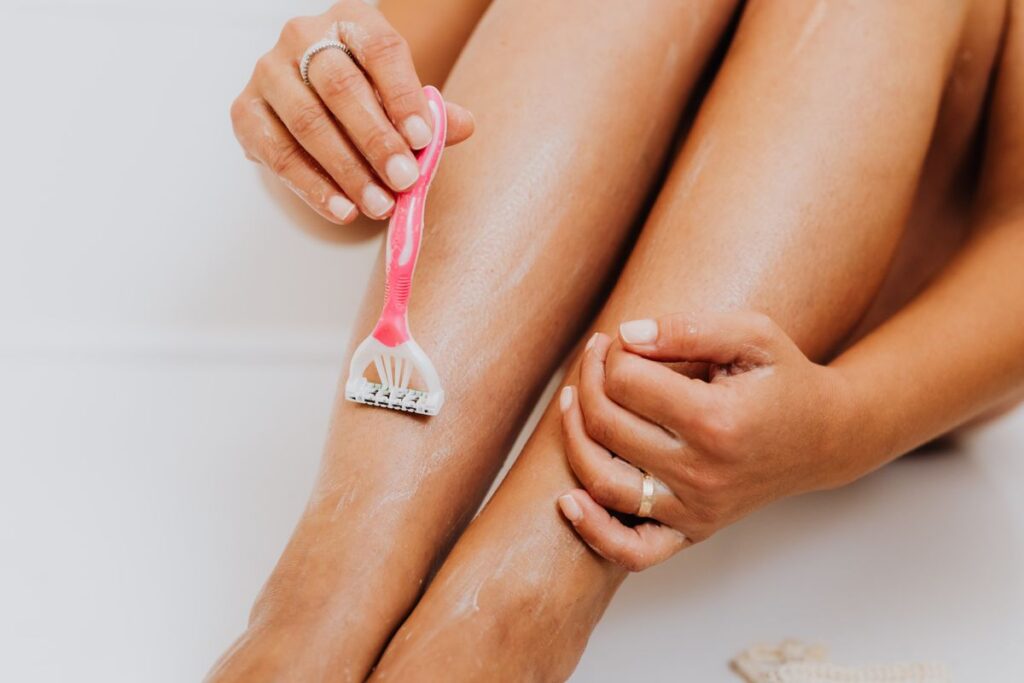
1. Shaving — The Most Common Trigger
Shaving does not create strawberry legs on its own, but it reliably makes them visible. A blade cuts each hair off flush with the skin, leaving a blunt, dark tip sitting right at the follicle opening. On pale skin with dark hair, that stubble is visible as a dot the moment it is cut.
Dry shaving, using a dull blade, or dragging the razor over the same patch repeatedly adds irritation on top. The follicle swells slightly, the opening widens, and the dot becomes more prominent rather than less.
This is why so many people find their legs look worse the more often they shave — and why shaving harder never solves it.
2. Clogged Follicles and Open Comedones
Legs have oil glands too. When sebum and dead skin collect in a follicle and the opening stays open, the contents oxidise and darken — an open comedone, exactly like a blackhead on the face.
The giveaway is that these dots persist whether or not you have shaved recently. If you stop shaving for two weeks and the dots are unchanged, clogging is a major part of your picture.
3. Keratosis Pilaris
Keratosis pilaris — often nicknamed “chicken skin” — occurs when keratin builds up and plugs the opening of the hair follicle instead of shedding normally. It affects a large share of the population and has a strong genetic component, with links to the same skin-barrier protein (filaggrin) involved in eczema.
The distinguishing feature is texture. Keratosis pilaris bumps can be felt as well as seen — a fine, sandpapery roughness, most often on the thighs, upper arms and buttocks. According to the American Academy of Dermatology, it cannot be cured, but it responds well to consistent exfoliation and moisturising, and it commonly improves with age.
4. Folliculitis
Folliculitis is inflammation or infection of the follicle itself, usually from bacteria, friction, sweat or shaving trauma. Unlike the other causes, it tends to be genuinely inflamed — red, sometimes itchy or tender, occasionally with a small white or yellow head.
Exfoliating acids will not fix active folliculitis and may aggravate it. If your bumps are sore, spreading, or filled with pus, treat that first and see a clinician.
5. Dry Skin — The Amplifier
Dryness rarely causes strawberry legs by itself, but it makes every other cause look considerably worse. Dehydrated skin is less flexible, so follicle openings gape slightly more, dead cells linger at the surface, and the contrast between dot and surrounding skin sharpens. Fixing dryness alone can visibly improve the appearance within a fortnight.
How to Get Rid of Strawberry Legs
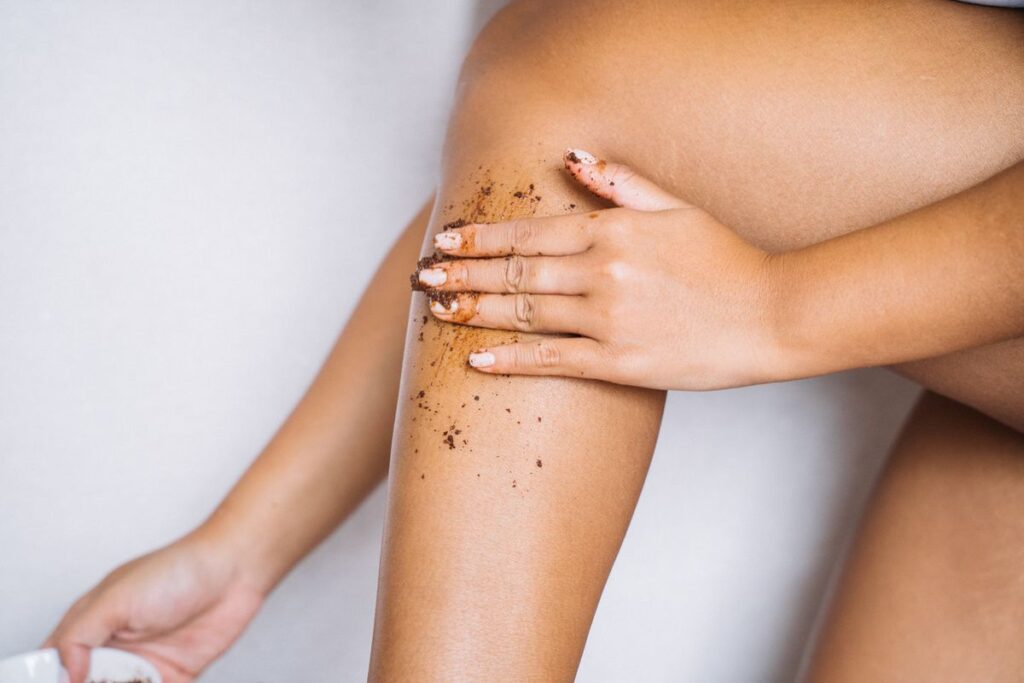
Step 1: Switch to Chemical Exfoliation
This is the highest-impact change for most people. Rather than scrubbing the surface, chemical exfoliants dissolve the bonds holding dead cells together and clear the material plugging each follicle.
- Salicylic acid (BHA) — oil-soluble, so it gets inside the follicle. Best for blackhead-type dots and clogged pores.
- Glycolic or lactic acid (AHA) — works on the surface layer. Best for overall texture, dullness and discolouration.
- Urea — both exfoliates and hydrates. Particularly effective for keratosis pilaris.
Start with two applications a week and build up as your skin tolerates it. Reviews of topical keratolytics consistently find that AHAs, BHAs and urea are the first-line treatments for follicular plugging — but also that consistency matters far more than concentration. Do not apply acids immediately after shaving, and always patch test first.
Step 2: Fix Your Shaving Routine
- Shave at the end of a warm shower, once hair has softened for several minutes.
- Never dry shave, and never use plain soap as a substitute for shaving gel.
- Replace the blade every five to seven shaves — a dull blade tugs, irritates and widens follicle openings.
- Shave with the grain first. Only go against it if you must, and never over the same patch repeatedly.
- Rinse with cool water and moisturise immediately afterwards.
Step 3: Moisturise Every Single Day
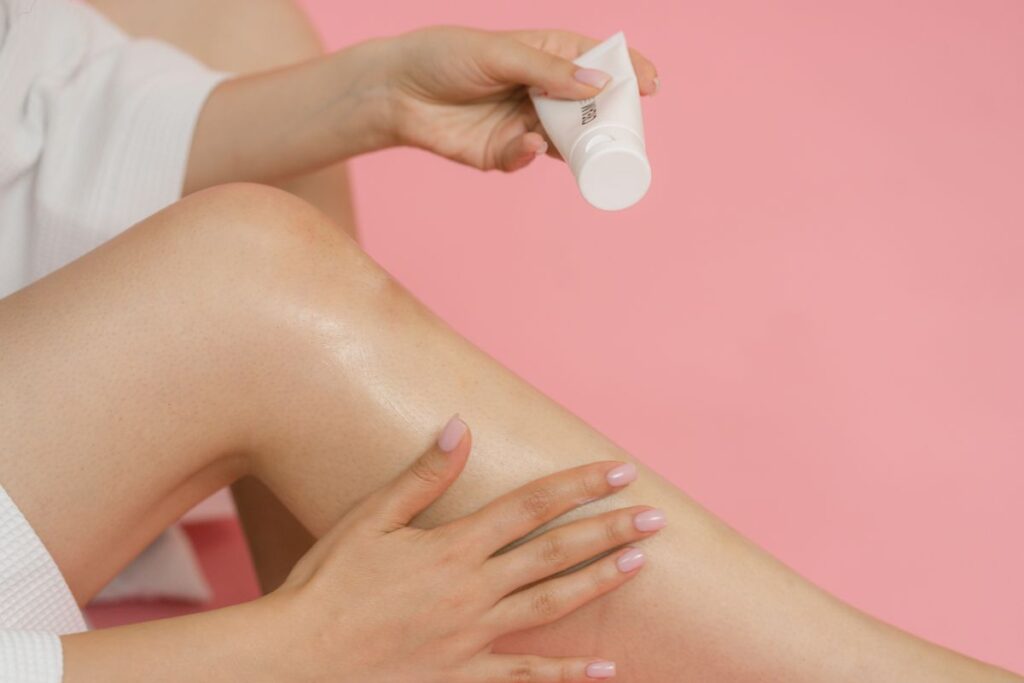
Moisturising is the step people skip and then wonder why the acids are not working. Exfoliation without hydration leaves the barrier compromised, which produces more flaking and more clogging.
Apply within a few minutes of towelling off, while skin is still slightly damp. Look for urea, ceramides, glycerin or lactic acid on the label. If your legs are also itchy, a thicker cream will outperform a light lotion.
What Not to Do
- Do not scrub harder. Aggressive physical scrubs, dry brushing and exfoliating gloves inflame follicles and can darken marks further, especially on medium and deeper skin tones.
- Do not squeeze or pick the dots. They are not blackheads you can extract, and picking risks scarring and pigmentation.
- Do not layer every acid at once. Combining strong AHAs, BHAs and retinoids on leg skin usually causes irritation that looks worse than the original problem.
- Do not expect results in a week. Skin cell turnover takes roughly a month; judge progress at 4–6 weeks, not 4–6 days.
When to See a Doctor
Strawberry legs are cosmetic and harmless in the vast majority of cases. Book an appointment if the bumps are painful, filled with pus, spreading, or accompanied by fever; if they are intensely itchy or appear alongside a rash; or if several months of consistent care produce no improvement at all. A dermatologist can confirm whether you are dealing with keratosis pilaris, folliculitis or something else entirely, and can prescribe stronger topical treatments.
The Long-Term Fix: Reduce the Hair Itself

If your dots are mostly dark stubble showing through the follicle, and they reappear within a day or two of every shave, then the hair itself is the visible problem. Exfoliating and moisturising will improve the surrounding skin, but the dot returns as soon as the hair does.
IPL works on this directly. It targets the melanin in the hair and follicle, converting light to heat that disrupts the follicle’s ability to produce new hair. Across a course of sessions the hair that regrows comes back finer, lighter and sparser — and a fine, pale hair is far less visible at the follicle opening than a coarse dark one.
The second effect matters just as much: as regrowth slows, you stop shaving every two or three days. Less blade contact means less irritation, less follicle swelling, and fewer of the micro-injuries that keep legs looking speckled. For the same reason, it helps with ingrown hairs, which share most of their causes with strawberry legs.
Legs are one of the best areas for IPL: the hair is usually dark, the surface is large and flat, and results tend to hold longer than in hormonally sensitive areas. Most people run 8–12 weekly sessions, with visible thinning after two or three. IPL works best on darker hair against lighter to medium skin (Fitzpatrick I–V) and is less effective on blonde, red, grey or white hair. You can read the full detail in Is IPL Hair Removal Permanent? How Long Results Actually Last.
One caveat worth stating plainly: IPL reduces the hair, not the keratin. If your strawberry legs are driven by keratosis pilaris or clogged pores rather than stubble, IPL will help with the hair component but you will still need the exfoliating and moisturising routine above.
Ready to stop shaving every other day? The SnowySkin™ IPL Laser Hair Removal Handset is FDA-cleared, completely painless, and backed by a 90-day money-back guarantee — so you can treat your legs at home, on your own schedule.
How Long Does It Take to See Results?
- Week 1–2: Skin feels softer and smoother from moisturising. Dots largely unchanged.
- Week 3–4: Texture improves noticeably; roughness from keratosis pilaris begins to settle.
- Week 4–6: Dots start to fade as follicles clear and turnover normalises. This is the honest first checkpoint.
- Month 3+: Sustained improvement, provided the routine continues. If shaving was the trigger and you have reduced regrowth, improvement keeps compounding.
Frequently Asked Questions About Strawberry Legs
What are strawberry legs?
Strawberry legs is the common name for the appearance of small dark dots across the legs, caused by enlarged or darkened hair follicles and pores. Each dot is typically a mix of trapped hair, keratin, oil and dead skin that has oxidised and darkened. It is a description of how skin looks rather than a single medical diagnosis, and it has several possible underlying causes.
Are strawberry legs permanent?
Usually not. Dots caused by shaving irritation or clogged follicles can be substantially reduced or cleared with consistent exfoliation, moisturising and better hair removal habits. Keratosis pilaris is genetic and cannot be cured, but its appearance can be managed well and it often improves with age. Very few people are stuck with strawberry legs permanently.
How do I get rid of strawberry legs fast?
There is no genuine overnight fix, and anything promising one is overselling. The fastest legitimate route is to moisturise daily, begin a chemical exfoliant two to three times a week, and pause shaving for a week or two while the skin settles. Most people see a real difference at four to six weeks, in line with the skin’s natural turnover cycle.
Is it strawberry legs or keratosis pilaris?
Use texture to tell them apart. Keratosis pilaris produces bumps you can feel — a rough, sandpapery surface, often on the thighs and upper arms as well as the shins. If your skin is smooth to the touch but visibly speckled, you are more likely dealing with shaving-related dots or clogged follicles. The two frequently occur together.
Does shaving cause strawberry legs?
Shaving does not create the condition on its own, but it is the most common trigger for the appearance. A razor cuts hair flush with the skin, leaving a blunt dark tip visible at the follicle opening, and blade irritation widens and inflames that opening. Dry shaving and dull blades make it markedly worse.
Does IPL help with strawberry legs?
It helps when the dots are mainly dark stubble visible at the follicle. IPL reduces the number of hairs and makes regrowth finer and lighter, so there is less pigment showing at each opening, and it removes the need to shave every few days. It does not treat keratin build-up, so if keratosis pilaris or clogged pores are your main cause you will still need an exfoliating and moisturising routine.
Should I exfoliate strawberry legs every day?
No. Daily exfoliation, particularly with scrubs, tends to inflame follicles and worsen discolouration. Two to three times a week with a chemical exfoliant is enough for most people. Build up gradually, skip it on days you shave, and always follow with moisturiser.
Can waxing get rid of strawberry legs?
Waxing removes hair from the root, so it can temporarily reduce the stubble-related dots and keeps legs smoother for longer than shaving. However, it can also irritate or distort follicles and cause ingrown hairs and folliculitis, which produce their own bumps. It is a partial and temporary improvement rather than a solution.
Do strawberry legs show more on certain skin tones?
Contrast is what makes them visible, so dark hair on lighter skin tends to show the speckled effect most clearly. On deeper skin tones the dots may be less obvious but post-inflammatory hyperpigmentation is more likely, meaning irritation or picking can leave lasting dark marks. That makes gentle treatment and sun protection especially important.
Sources and Further Reading
- American Academy of Dermatology — Keratosis pilaris: Diagnosis and treatment and Keratosis pilaris: Self-care
- Cleveland Clinic — Keratosis Pilaris: Causes, Symptoms and Treatment
- DermNet — Keratosis pilaris
- SnowySkin — Is IPL Hair Removal Permanent? How Long Results Actually Last
