
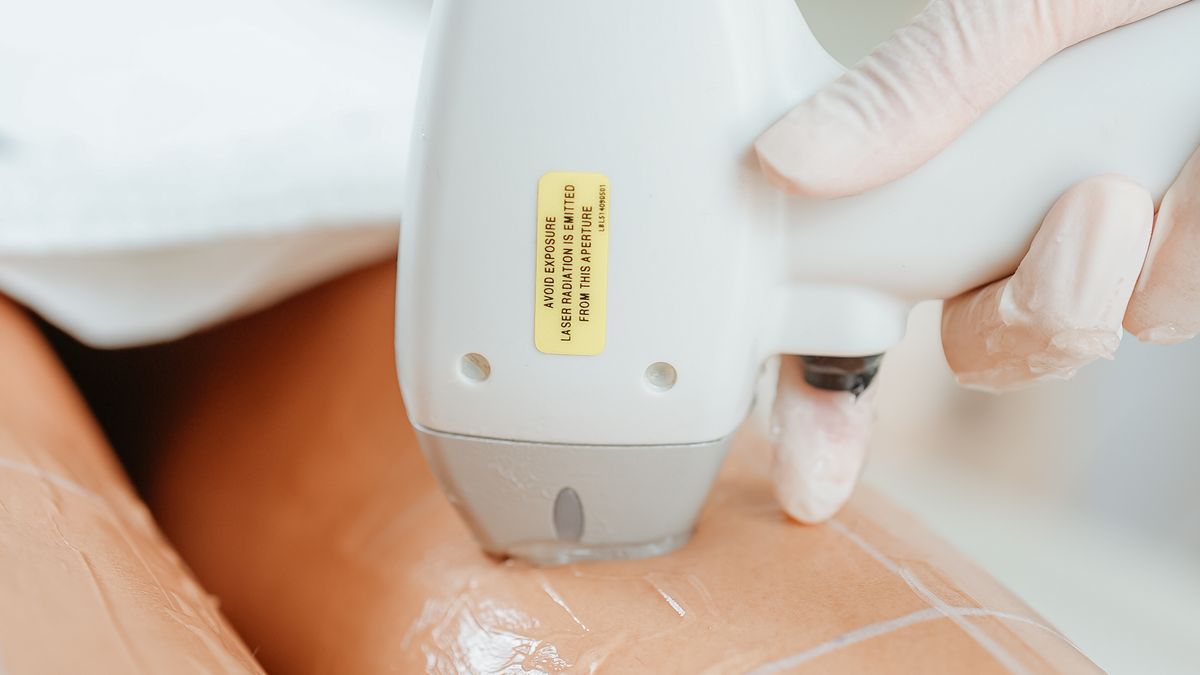
Does laser hair removal hurt? It is the single most common question people ask before booking a first session, and the answers online swing wildly between “completely painless” and “the worst thing I have ever done.”
The truthful answer sits in the middle, and it is more useful than either extreme. Laser hair removal is uncomfortable rather than genuinely painful for most people, it varies enormously by body area, and a great deal of that discomfort is within your control.
This guide answers the question properly: what each pulse actually feels like, which areas hurt most, what makes it worse, seven things that reliably make it easier, and how it compares with waxing and with at-home IPL.
Key Takeaways
- Does laser hair removal hurt? Mildly — most people describe a warm pinprick or an elastic band snapped against the skin, lasting a fraction of a second.
- Dermatologists consistently rate it as less painful than waxing or tweezing, and it is far quicker per area.
- Bikini line, upper lip and underarms hurt most. Legs, arms and back are mild by comparison.
- Contact cooling on the device is the biggest single factor in comfort — more than your pain threshold.
- Does laser hair removal hurt less over time? Yes — by sessions four to six there is less hair absorbing energy, so most people report noticeably less discomfort.
- At-home IPL uses lower energy per pulse and is gentler again, though it needs more sessions to get there.
Does Laser Hair Removal Hurt? The Short Answer
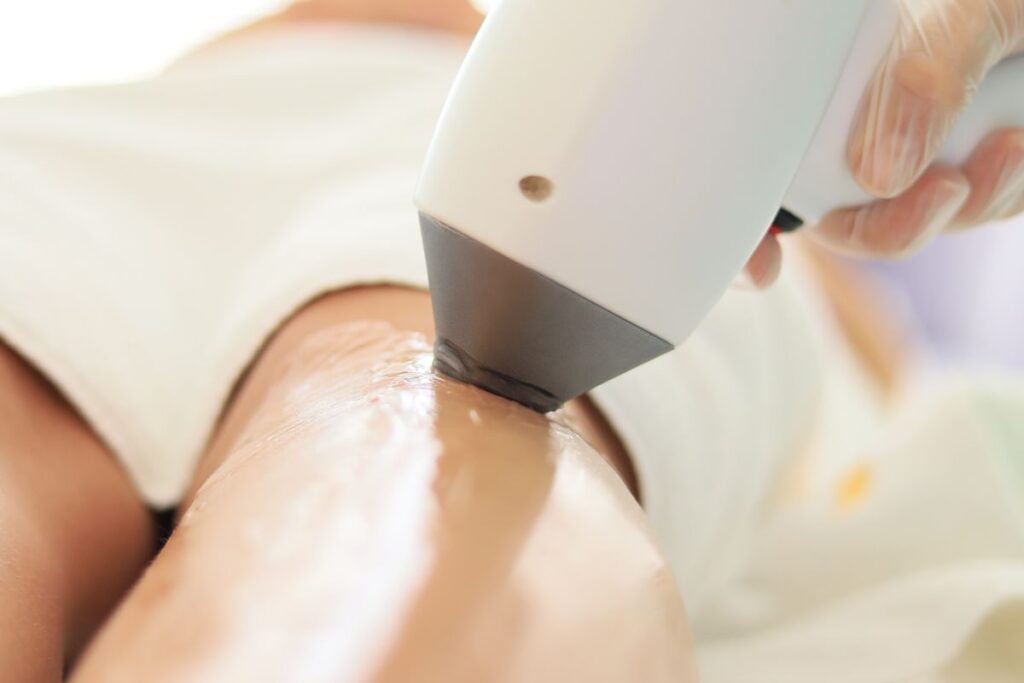
Does laser hair removal hurt badly? For the large majority of people it is a two or three out of ten on the pain scale — noticeable, occasionally sharp, over almost instantly, and entirely tolerable without anaesthetic.
The American Academy of Dermatology puts it plainly: when performed by a board-certified dermatologist, laser hair removal should involve little to no discomfort, and is considerably less painful than tweezing, waxing or getting a tattoo.
That said, “little to no discomfort” is an average across a whole body. Ask someone mid-way through a Brazilian and you will get a different answer than someone having their forearms done. The honest response to “does laser hair removal hurt” is: it depends far more on where than on whether.
What Laser Hair Removal Actually Feels Like
Does Laser Hair Removal Hurt Constantly, or in Bursts?
The near-universal description is an elastic band snapped sharply against the skin, followed by a brief spread of heat. Others describe warm pinpricks, or a hot static-like flick.
Does laser hair removal hurt continuously? No — each individual pulse lasts milliseconds. The sensation registers, peaks and fades before the next pulse arrives. There is no building, sustained pain of the kind you get from a wax strip being pulled — it is a series of separate, brief events.
Between pulses, most machines press a chilled sapphire tip against the skin, which is cold enough to be the dominant sensation for many people. A good portion of what you feel during a session is cold, not heat.
Does Laser Hair Removal Hurt More Than Waxing?
Almost universally, no. Waxing rips hair from the follicle across a whole strip at once, producing a sustained tearing sensation and lingering soreness. Laser delivers isolated pulses of heat with cooling either side.
People who find waxing genuinely painful usually rate laser as markedly easier. The exception is the very first session on a dense bikini area, where a high hair density means more pigment absorbing energy and a hotter response.
Does Laser Hair Removal Hurt More Than Shaving or Epilating?
Shaving is painless in the moment, so laser obviously hurts more during the session. But shaving’s costs are deferred: razor burn, itching regrowth, ingrown hairs and the speckled look of strawberry legs. Epilating, which yanks multiple hairs mechanically, is generally rated as more painful than laser by a clear margin.
| Method | Pain during | Pain after | Sensation |
|---|---|---|---|
| Laser | 2–4 / 10 | Mild warmth, few hours | Brief elastic-band snaps with cooling |
| Waxing | 5–7 / 10 | Soreness, 1–2 days | Sustained tearing across a strip |
| Epilating | 6–8 / 10 | Tender, often bumps | Continuous plucking |
| Shaving | 0 / 10 | Irritation, ingrowns | None during |
| At-home IPL | 1–3 / 10 | Minimal | Gentle warmth per flash |
Does Laser Hair Removal Hurt More on Some Body Areas?
Yes — and this is the biggest variable of all. Three things drive it: how thin the skin is, how dense and coarse the hair is, and how close the treated area sits to bone or nerve endings.
| Area | Typical pain | Why |
|---|---|---|
| Bikini / Brazilian | High (6–8) | Thin skin, very coarse dense hair, many nerve endings |
| Upper lip | High (5–7) | Thin skin directly over bone, densely innervated |
| Underarms | Moderate-high (5–7) | Thin skin, coarse hair, sensitive area |
| Chin / jawline | Moderate (4–6) | Coarse hair close to bone |
| Stomach / chest | Moderate (3–5) | Varies with hair density |
| Lower legs | Mild (2–4) | Thicker skin, shin can sting over bone |
| Arms / shoulders | Mild (1–3) | Finer hair, less sensitive skin |
| Back | Mild (2–4) | Thick skin, though coarse hair raises it |
What Makes It Hurt More — or Less
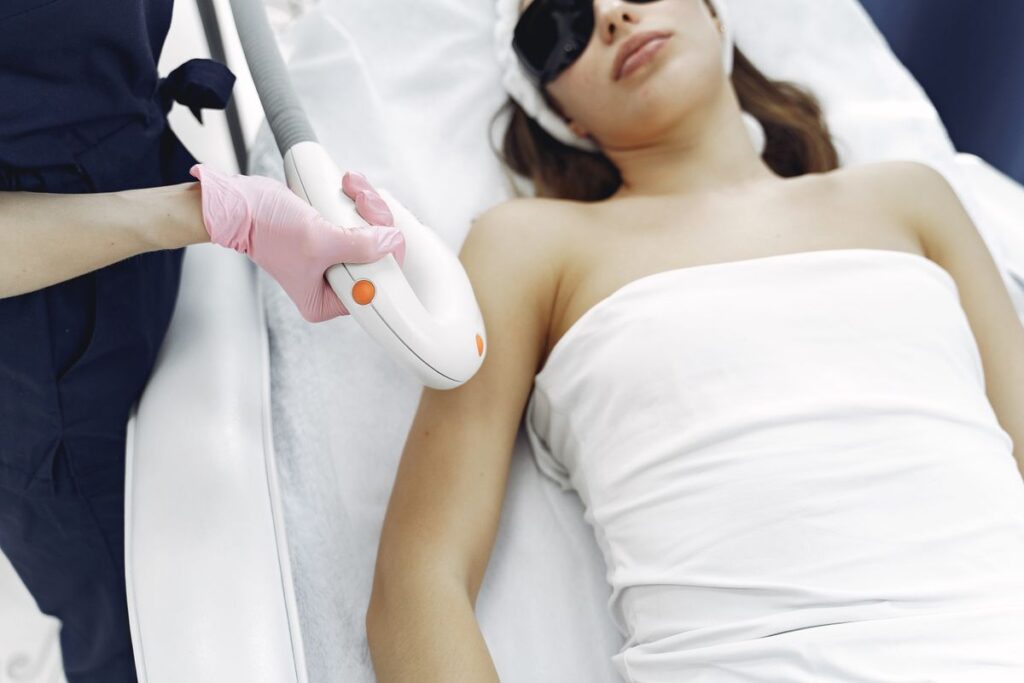
Does Laser Hair Removal Hurt Less With Better Cooling?
This matters more than almost anything else. Modern systems use contact cooling (a chilled tip), cryogen spray, or forced cold air. A machine with strong contact cooling can make a bikini session genuinely manageable; the same wavelength without cooling can be eye-watering.
Wavelength matters too. Alexandrite lasers are fast and effective on lighter skin but tend to feel sharper. Nd:YAG, used for deeper skin tones, penetrates further and is often described as a deeper, hotter sensation. Diode sits between the two and is the most common choice.
Hair Density and Coarseness
Laser works by heating melanin in the hair. More hair, and coarser hair, means more pigment absorbing energy and more heat generated per pulse. This is why the first session is nearly always the most uncomfortable, and why the bikini area outranks the forearm.
Timing, Hormones and Caffeine
Many people report heightened sensitivity in the few days before a period, and booking mid-cycle instead is a simple, free adjustment. Sleep deprivation lowers pain tolerance measurably. Caffeine’s effect on procedural pain is debated and evidence is thin, but plenty of clinics suggest skipping your morning coffee, and there is little cost in trying it.
Practitioner Skill
An experienced operator selects appropriate settings, keeps the handpiece flush against the skin, avoids overlapping pulses, and adjusts as they go. The AAD is explicit that treatment risk drops substantially when a board-certified dermatologist performs it. Comfort follows the same pattern.
7 Ways to Make Laser Hair Removal Hurt Less
Does laser hair removal hurt enough to need managing? For sensitive areas, yes — and these seven adjustments make the biggest practical difference.
- Shave the day before — never skip it. Surface hair scorches and conducts heat into the skin. Arriving unshaven is the fastest way to make a session hurt far more than it should.
- Ask about topical numbing cream. For the bikini line or upper lip, a lidocaine cream applied 30–45 minutes beforehand makes a real difference. Only use what your clinic supplies or approves, and never apply it over a large area of the body at once.
- Book mid-cycle. Avoid the few days immediately before a period, when skin sensitivity is commonly higher.
- Take paracetamol beforehand, not ibuprofen or aspirin. Paracetamol about an hour before takes the edge off. Anti-inflammatories and aspirin can increase bruising risk — check with your clinic first.
- Stay out of the sun beforehand. Tanned or sunburnt skin holds more melanin at the surface, absorbs more energy, hurts more and raises the risk of burns. Most clinics require four weeks without sun exposure or self-tan.
- Speak up during the session. Settings can be adjusted, cooling increased, and the area worked in shorter passes. A good practitioner would far rather adjust than have you endure it.
- Breathe out as the pulse fires. Holding your breath and tensing amplifies the sensation. Slow exhalations through the pass genuinely help.
Does Laser Hair Removal Hurt Less Over Time?
Yes, and this is one of the more reassuring things to know before a first appointment. Every completed session destroys a proportion of the follicles in the treatment area, so each subsequent visit has less hair, less pigment and less heat generated per pulse.
Most people find sessions one and two the most uncomfortable, with a clear drop by four to six. By the end of a course, many describe the sensation as barely noticeable outside the most sensitive areas. If you are dreading it, the hardest part is at the start.
Does Laser Hair Removal Hurt More Than At-Home IPL?
Generally yes, professional laser is the sharper sensation of the two. Clinic lasers concentrate a single wavelength at high energy per pulse, which is why they work faster — and why they are felt more.
At-home IPL spreads broad-spectrum light at considerably lower energy across a wider window. Most users describe it as a flash of warmth rather than a snap, comfortable enough to do while watching television. That gentleness is a genuine trade-off rather than a free win: lower energy means more sessions and a longer course to reach a comparable result.
Which is right for you depends on what you are optimising for. If speed matters most and you are comfortable with a sharper sensation and a clinic budget, laser wins. If comfort, privacy and cost matter more, at-home IPL gets to a similar place more gradually. We covered how durable those results are in Is IPL Hair Removal Permanent? How Long Results Actually Last.
If the pain question is what has kept you from starting, the SnowySkin™ IPL Laser Hair Removal Handset is designed to be pain-free, is FDA-cleared, and comes with a 90-day money-back guarantee — so you can find out on your own terms, at home.
Does Laser Hair Removal Hurt Afterwards? What Is Normal
Does laser hair removal hurt after the session itself? Mild redness and slight swelling around the follicles, rather like light sunburn, is normal and typically settles within a few hours to a day. A cool compress and a fragrance-free moisturiser are usually all that is needed.
Contact your clinic or a doctor if you develop blistering, crusting, open sores, spreading redness, or skin that darkens or lightens noticeably in patches. These are not part of a normal recovery and warrant assessment rather than waiting.
Frequently Asked Questions: Does Laser Hair Removal Hurt?
Does laser hair removal hurt a lot?
For most people and most body areas, no. Typical ratings sit around two to four out of ten — a brief elastic-band snap with heat, over in milliseconds and eased by the device’s cooling. Sensitive areas such as the bikini line and upper lip rate higher, often five to eight, particularly in the first session when hair is at its densest.
Does laser hair removal hurt more than waxing?
Rarely. Dermatologists consistently rate laser as less painful than waxing or tweezing. Waxing produces a sustained tearing sensation across a whole strip plus lingering soreness, whereas laser delivers isolated millisecond pulses with cooling applied either side. Most people who dislike waxing find laser considerably easier.
Does laser hair removal hurt most on the bikini line?
The bikini line and Brazilian area, followed by the upper lip and underarms. These combine thin skin, dense coarse hair and a high concentration of nerve endings, and the upper lip additionally sits directly over bone. Legs, arms, shoulders and back are consistently reported as far milder.
Does laser hair removal hurt less over time?
Yes. Each session destroys a proportion of follicles, so there is progressively less hair to absorb energy and generate heat. Sessions one and two are usually the most uncomfortable, with most people noticing a clear reduction by sessions four to six.
Can I use numbing cream for laser hair removal?
Usually yes, and it is standard practice for small sensitive areas. A lidocaine-based cream applied 30–45 minutes beforehand meaningfully reduces discomfort on the bikini line or upper lip. Use only what your clinic provides or approves, and never apply it across a large area of the body at once, as absorption over broad areas carries real risk.
Does laser hair removal hurt on the face?
The upper lip is one of the more uncomfortable spots, typically five to seven out of ten, because the skin is thin, densely innervated and sits directly over bone. The chin and jawline are usually a little easier. Sessions are short, though — an upper lip takes under a minute — so the discomfort is brief.
Why did my laser session hurt more than last time?
Common reasons include not shaving beforehand, recent sun exposure or self-tan, being close to your period, a higher energy setting than last visit, a different practitioner or machine, or being tired or dehydrated. If nothing obvious changed, raise it with your clinic — settings may have been increased more than your skin was ready for.
Does laser hair removal hurt more than at-home IPL?
Generally yes. Clinic lasers use a single concentrated wavelength at high energy per pulse, producing a sharper snap. At-home IPL emits broad-spectrum light at much lower energy, which most users describe as a flash of warmth rather than a sting. The trade-off is that IPL needs more sessions over a longer period to reach comparable results.
Is it normal for skin to hurt after laser hair removal?
Mild redness, warmth and slight swelling around the follicles are normal and usually settle within a few hours to a day, much like light sunburn. A cool compress helps. Blistering, crusting, open sores, spreading redness or patchy changes in skin colour are not normal and should be assessed by your clinic or a doctor.
The Verdict
So, does laser hair removal hurt? Enough to notice, rarely enough to regret. It is a brief, sharp warmth that most people rank below waxing, that concentrates in a handful of sensitive areas, and that fades markedly as the course progresses. If discomfort is the only thing holding you back, it is a smaller obstacle than the internet suggests — and gentler at-home options exist if you would rather start slowly.
Sources and Further Reading
- American Academy of Dermatology — Laser hair removal: FAQs and Laser hair removal: Overview
- American Academy of Dermatology — Laser hair removal: Preparation
- Cleveland Clinic — Laser Hair Removal: How It Works and What to Expect
- SnowySkin — Is IPL Hair Removal Permanent? How Long Results Actually Last
